How to budget your first paycheck at 18 comes down to one simple truth: decide where your money goes before it disappears. When I got my first paycheck at 18, I thought having money meant freedom — until it was gone in days and I felt stressed, embarrassed, and completely unprepared. This guide isn’t theory or finance jargon. It’s the exact process I learned the hard way, step by step, to take control of my money early and avoid the mistakes most people don’t fix until their 30s.
I didn’t budget my first paycheck at 18. I spent it. Fast. And then I wondered why I was stressed, broke, and embarrassed two weeks later. What follows is the real, human process I went through to finally learn how to budget my first paycheck at 18 — not perfectly, but well enough to change my life.
When I finally accepted that I needed help, I started looking into basic budgeting skills for beginners and realized how little I had actually been taught about money growing up. Budgeting wasn’t something I failed at — it was something I was never shown how to do properly.
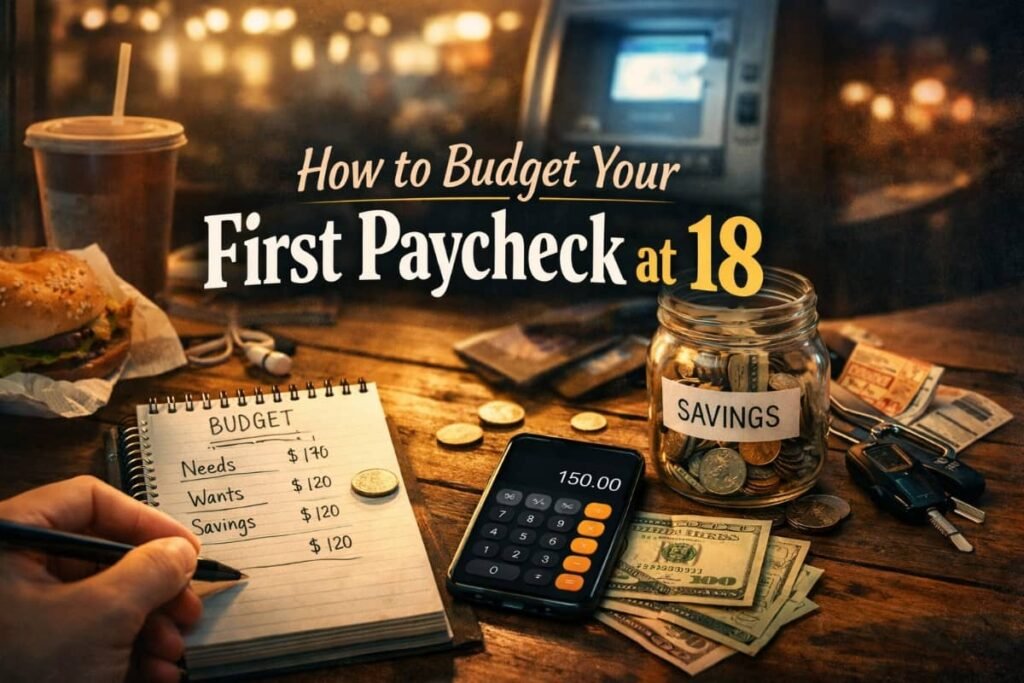
How to Budget Your First Paycheck at 18 When You’ve Never Managed Money Before
I still remember the sound of the ATM receipt printing. That thin paper felt like proof I was finally an adult. I was 18, freshly employed, and convinced that money problems were something older people dealt with.
That first paycheck felt huge. Not because it was huge — it wasn’t — but because it was mine. I earned it. Every shift, every annoying customer, every late night.
Here’s what no one told me:
Your first paycheck isn’t just money. It’s a test.
A test of impulse.
A test of priorities.
A test of whether in the future-you gets a voice… or gets ignored.
I failed that test spectacularly.
What surprised me most was learning that my mistakes weren’t unique. So many young people struggle because they’ve never been exposed to real money management tips for teenagers, especially when school focuses more on exams than everyday life skills.
Why Budgeting at 18 Feels Awkward (and Why That’s Normal)
Let’s be honest. When you’re 18, budgeting feels weird.
You don’t have a mortgage.
You’re not thinking about retirement.
You just want to enjoy finally having cash.
I remember thinking, “I’ll budget later. Right now, I deserve this.”
And yes — you do deserve to enjoy your money. But here’s what I learned the hard way:
Budgeting isn’t about restriction. It’s about permission.
A budget doesn’t say “you can’t.”
It says, “you can — without guilt or fear.”
Once I understood that, everything shifted.
How I Blew My First Paycheck (So You Don’t Have To)
I wish I could tell you I spent my first paycheck wisely. I didn’t.
I bought clothes I didn’t need.
I ate out constantly.
I said yes to everything because I finally could.
Two weeks later, I had:
- No savings
- No emergency cushion
- A mild panic attack when my card declined
That moment — standing in line, pretending I wasn’t embarrassed — was my wake-up call.
Money disappears faster when it has no plan.
That was the moment I decided I needed to learn how to budget my first paycheck at 18 — properly this time.
How to Budget Your First Paycheck at 18 (The Simple System That Saved Me)
Step 1: Start With One Honest Question
Before spreadsheets. Before apps. Before rules.
Ask yourself:
“What do I want my money to do for me?”
At 18, my answer was simple:
- I wanted less stress
- I wanted some freedom
- I wanted to stop feeling broke all the time
That clarity matters more than any budgeting method.
Step 2: Pay Yourself First (Even If It’s Tiny)
This was the hardest lesson — and the most powerful.
The first time I tried saving, I waited until the end of the month. There was nothing left.
So I flipped it:
- The moment I got paid
- I moved 10% into savings
- No debate. No excuses.
Sometimes it was $20. Sometimes $40.
It didn’t matter.
What mattered was the habit.
Saving first taught me that future-me mattered just as much as present-me.
I still remember staring at my pay stub and wondering why my first paycheck looked smaller than expected. Nobody explained taxes, deductions, or why my “hourly rate” didn’t match what landed in my account.
Step 3: Use the “Four Buckets” Method (No Math Degree Required)
This is the method that finally stuck for me.
I split my paycheck into four simple buckets:
1. Needs
- Phone bill
- Transport
- Basic food
- Anything required to live/work
2. Fun
- Eating out
- Entertainment
- Clothes
- Random joys
3. Savings
- Emergency fund
- Short-term goals
- Long-term peace of mind
4. Giving / Flex
- Gifts
- Helping family
- Unexpected stuff
No complex percentages.
No guilt.
Just awareness.
The first real test of my budget came when something unexpected happened. That’s when I truly understood the importance of building an emergency fund early — not as a financial rule, but as emotional protection against panic and debt.
What Budgeting at 18 Taught Me About Self-Respect
This part surprised me.
Once I started budgeting, something strange happened:
I felt… calmer.
Not richer.
Not perfect.
Just calmer.
Budgeting taught me:
- To pause before spending
- To think before reacting
- To respect my own effort
Every dollar represented an hour of my life.
That realization changed everything.
How Much Should You Save From Your First Paycheck at 18?
This is one of the most searched questions — and here’s the honest answer:
Save what you can without quitting.
For me:
- Some weeks it was 5%
- Some weeks it was 15%
The goal wasn’t perfection.
The goal was consistency.
If saving feels painful, you won’t stick with it.
If it feels doable, you’ll build momentum.
Once I understood why saving early matters, even small amounts felt powerful. Saving $20 didn’t seem pointless anymore — it felt like proof that I was finally thinking ahead instead of just surviving payday to payday.
Budgeting Mistakes I Still See 18-Year-Olds Making
I mentor younger coworkers now, and I see the same mistakes I made.
Mistake 1: Waiting to “make more money”
You don’t need more money.
You need more clarity.
Mistake 2: Copying someone else’s budget
Your life isn’t their life.
Your budget should fit you.
Mistake 3: Being too strict
Budgets that don’t allow fun don’t survive.
How to Budget Your First Paycheck at 18 Without Feeling Miserable
Here’s the secret no one says out loud:
If your budget feels like punishment, it’s broken.
Your budget should:
- Let you enjoy your money
- Reduce stress
- Give you confidence
Mine finally worked when I:
- Scheduled fun spending
- Forgave small mistakes
- Focused on progress, not perfection
The Moment I Realized Budgeting Was Changing My Life
About six months in, my phone broke.
Old me would’ve panicked.
New me opened my savings and paid for it.
No stress.
No borrowing.
No shame.
That was the moment I realized budgeting wasn’t about money.
It was about freedom.
How Budgeting Early Gave Me a Head Start Most People Never Get
Starting at 18 gave me something priceless: time.
Time to:
- Learn without huge consequences
- Build habits slowly
- Make mistakes cheaply
Most people don’t learn this until debt forces them to.
You don’t need to be perfect.
You just need to start early.
How to Budget Your First Paycheck at 18 Using Just Your Phone
If you’re wondering how to actually track things, here’s what worked for me:
- One notes app
- One weekly check-in
- One simple list:
- Money in
- Money out
- What’s left
That’s it.
You don’t need fancy tools.
You need honesty and consistency.
Frequently Asked Questions (FAQs)
1. How should an 18-year-old budget their first paycheck?
Start simple. Save a small portion first, cover essentials, allow guilt-free fun, and track everything weekly.
2. Is it really necessary to budget at 18?
Yes — not because you have big bills, but because habits form fast. Early budgeting builds lifelong confidence.
3. How much money should I save from my first job?
Aim for 5–20%. Any amount saved consistently matters more than the number.
4. What’s the easiest budgeting method for beginners?
The four-bucket method (Needs, Fun, Savings, Flex) is simple and flexible.
5. What if I mess up my budget?
You will. Everyone does. Adjust, forgive yourself, and keep going.
Read Also : How to Save Money As a Teenager With No Job
Final Thoughts: Your First Paycheck Is Bigger Than Money
Learning how to budget your first paycheck at 18 isn’t about becoming boring or restrictive.
It’s about:
- Respecting your effort
- Protecting your future
- Giving yourself options
I didn’t get it right the first time.
Or the second.
But I started — and that changed everything.
If you’re holding your first paycheck right now, remember this:
You’re not just earning money. You’re learning how to handle freedom.And that skill?
It’s worth more than the paycheck itself.